chit at work
How to organize voice memos
Almost everyone who records voice notes hits the same wall: the recording habit works, and the retrieval habit never forms. You end up with hundreds of files named after a street corner, and the archive quietly becomes write-only.
Why folders never fix it
The usual advice is to rename files and sort them into folders. It fails for a boring reason: the cost lands at the wrong moment. Renaming happens after the recording, when you have moved on to the next thing, and the value only appears months later. Nobody sustains that trade, and no amount of discipline advice changes it.
The second reason is that a filename is a terrible index for speech. You cannot name a file with the four things that were said in it, so even a well-named archive answers only the questions you thought to ask at recording time.
The workflow that actually holds
Whatever tool you use, three habits do most of the work, and they all move the cost to the moment of recording rather than after it.
- Say the metadata out loud. Start with who and where — "Tuesday, at the Fairview job, with Dana" — so the recording carries its own index.
- One capture, one subject. Two short recordings retrieve far better than one long one covering three topics.
- Say numbers and names twice. They are what you will search for and what transcription most often gets wrong.
- Close with the action. "So: I owe her the quote by Thursday." A recording that ends in a commitment is a to-do, not an artefact.
- Never rename anything. If your system needs renaming to work, it will not work.
What removes the problem instead of managing it
The structural fix is to stop treating recordings as files. With chit's $9 a month membership, every capture becomes a transcript, so the content itself is searchable rather than the filename. Ask a question — what did the client say about the budget, who agreed to send the drawings — and you get the moment back with a timestamp.
The daily digest is the other half. At the end of the day you get what happened, what was decided and the handful of things that need you next, gathered from everything you captured. That is the part that converts a pile of audio into something you would actually act on, and it is the reason the archive stops being write-only.
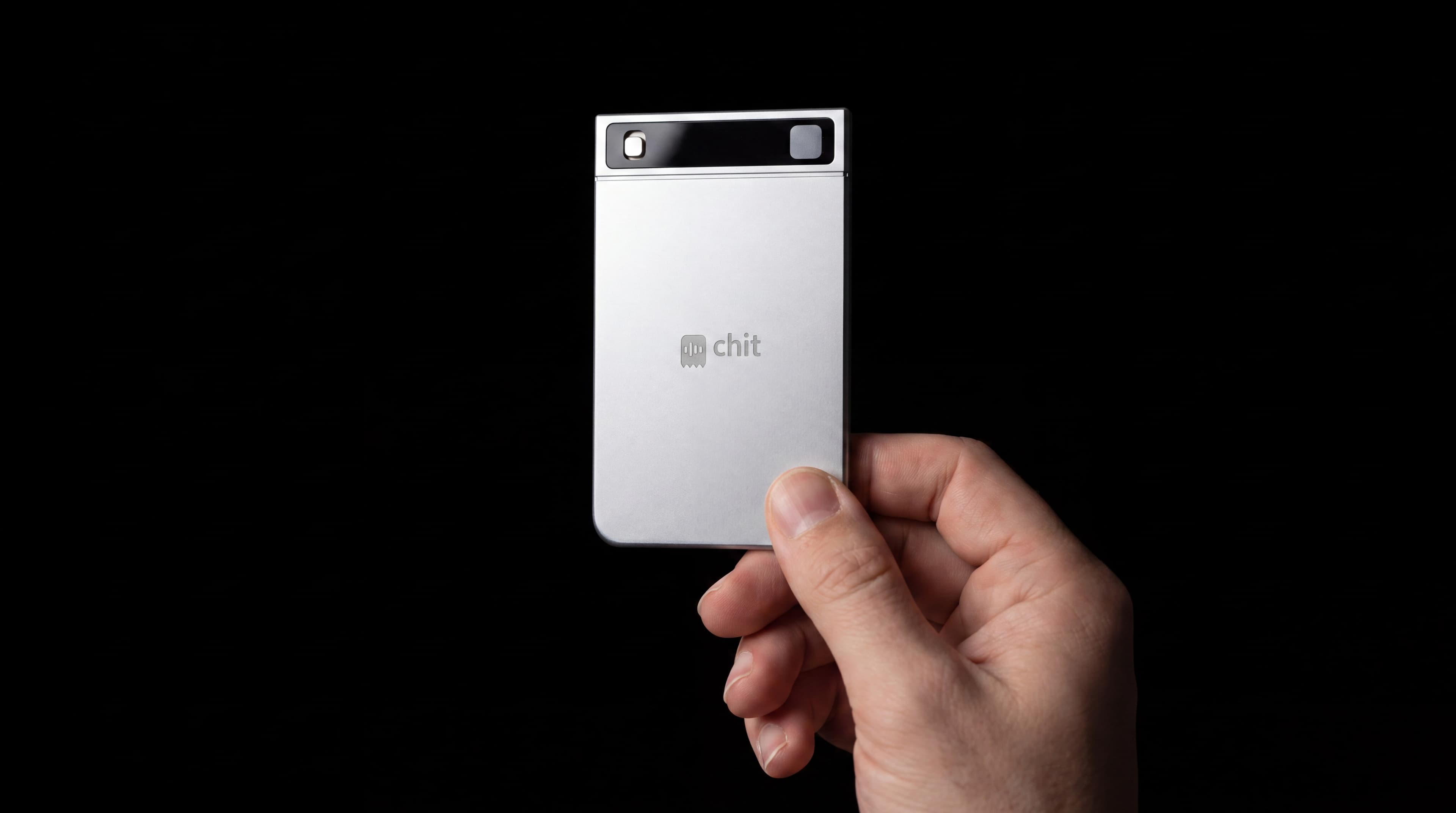
The device is $129 with one button, which matters here for a reason people underestimate: the capture habit only survives if starting one costs nothing. No unlock, no app, no filename.
Good questions
Can I search inside my recordings?
With the membership, yes — every capture becomes a transcript and ask-anything search runs across all of them, returning the moment with its timestamp.
Do I have to name or tag anything?
No. Naming is the habit that always breaks; the archive is searchable by what was actually said instead.
What about the memos I already have on my phone?
Those stay where they are — chit does not import them. The workflow above will still make new ones more findable whatever tool you use.
How long are recordings kept?
The membership includes cloud backup, and you can delete any capture — audio, transcript and summary — in one tap.
Reviewed 2026-08-07.
Nearby trades