chit at work
A voice recorder with transcription and summary: what to actually look for
If you are searching for this, you have already worked out the important thing: the recording is not the deliverable. Nobody re-listens to an hour of audio, and almost nobody re-reads an hour of transcript either. The product you are actually shopping for is what comes after both.
Transcription is the floor, not the product
A transcript on its own just moves the problem. Instead of an hour of audio you cannot search, you have twelve pages of text you will not read. It is genuinely useful as a record — you can search it, quote from it, settle what was actually said — but as a way of knowing what to do next, it is raw material.
The category grew up when the pipeline stopped at transcription. The question to ask of any recorder now is what it does with the transcript once it has one.
The three outputs that matter
Whatever you buy, look for these three, because together they are the difference between an archive and a tool.
- The transcript — the searchable record of what was said, for the day you need the exact words.
- The summary — what happened and what was decided, short enough that you will actually read it.
- The next steps — the commitments and to-dos pulled out of the conversation, because these are the part you will otherwise lose.
How chit's version works
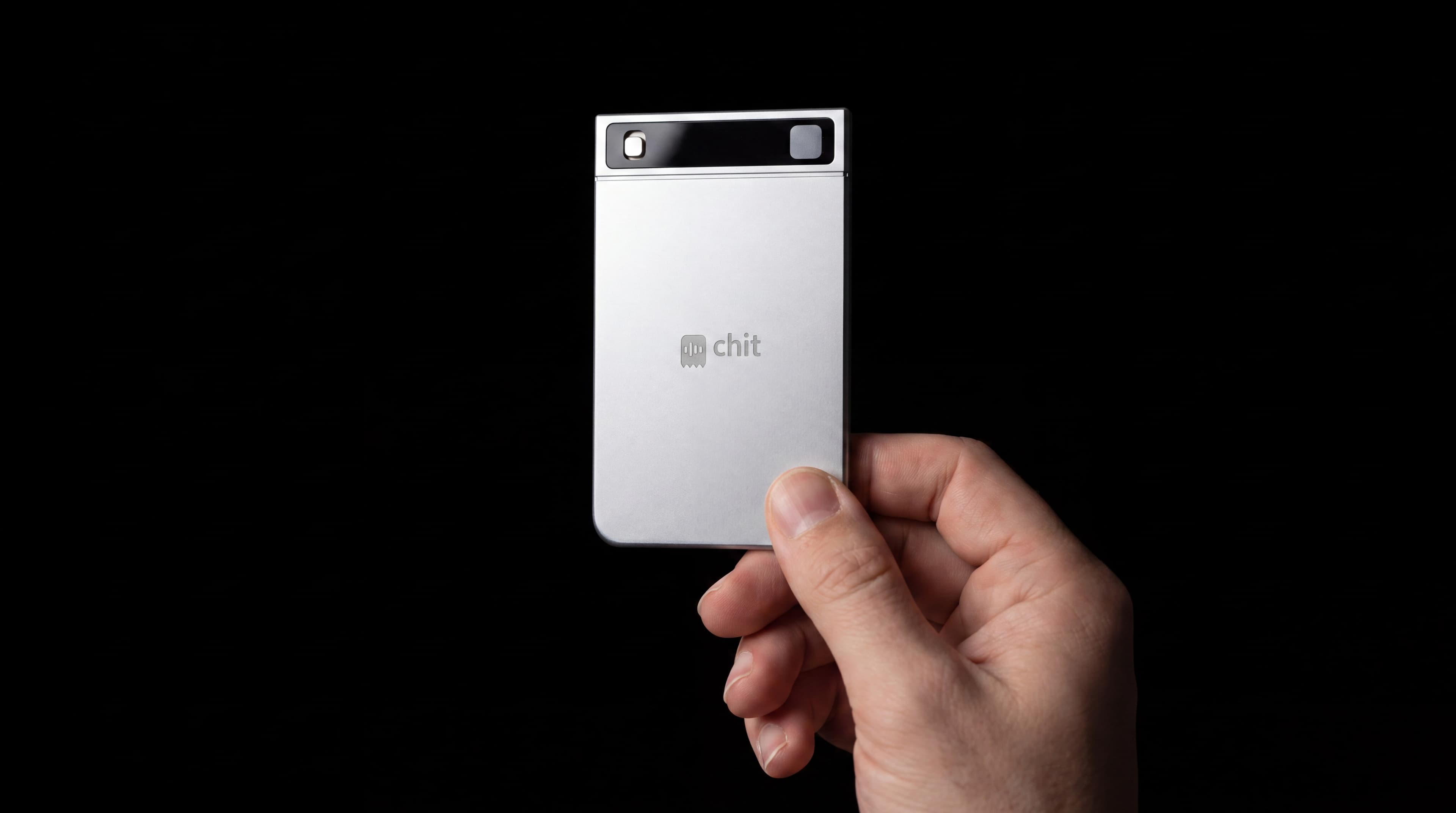
chit is a card with one button. Hold it, talk, let go. Every capture becomes a transcript, and at the end of the day the whole set comes back as a digest: what happened, what was decided, and what needs doing next. Ask-anything search runs across everything you have ever captured, so a detail from six weeks ago comes back with a timestamp rather than an afternoon of scrubbing.
The summary is not a separate feature you run — it arrives. That distinction sounds small and is not: a summary you have to remember to generate is a summary that stops happening in week three.
Where the notes should land
The quiet failure mode of this category is the silo: a beautifully summarized conversation living in an app nobody opens. The test is whether the output reaches the places your work already happens.
chit connects to your calendar and your mail. Captures are matched to the meeting they came from, next steps can become calendar events, and follow-ups arrive drafted with the context of what was said — you read them and you send them; nothing goes out on its own. You choose which accounts to connect and can disconnect any of them at any time.
A card versus a phone app
A phone app can transcribe and summarize too, and it may already suit your routine. A separate recorder is worth considering if you prefer a physical control for deliberate captures away from a desk. chit records only while the button is held; it has no wake word or always-on microphone. Compare the current requirements of any tool with the places you intend to use it.
chit one is $129 and chit one Pro is $179. The $9/month membership provides the AI features, including transcripts, summaries, next steps, a daily brief, plain-language search, and opt-in calendar and mail connections. Membership billing starts 14 days after checkout. Units are built to order and take about three weeks to arrive, so billing may begin before delivery. Shipping is free in the contiguous US, returns are free for 30 days, and the device carries a one-year limited warranty.
chit provides transcripts, summaries, and next steps from deliberate captures. ServiceTitan, Housecall Pro, and Jobber connections are listed among chit’s field-service capabilities; confirm the records, permissions, and setup for your team before relying on a direct integration. A connection to one named platform does not imply support for every CRM.
Good questions
Does the summary cost extra or draw on credits?
No. The $9 a month membership includes unlimited transcripts and the daily digest — there is no minute cap and no separate credit pool for summaries.
Do I have to press something to get the summary?
No. Every capture becomes a transcript, and the digest arrives at the end of the day with the decisions and next steps pulled out.
Can it label who said what?
No — transcripts are not speaker-labelled. The habit that works is saying names out loud as you go; they end up in the transcript where search can find them.
Am I allowed to record my conversations?
That depends on your state and the situation — recording law varies, and some states require every party to consent. See our recording-consent pages for the reference table; none of this is legal advice.
Reviewed 2026-09-08.
Elsewhere on the site
Nearby trades