chit at work
Meeting notes template with action items
A useful meeting note makes the next step clear: what was decided, who will do what, and when the group will check again. Copy the blank template below, then use the worked example to turn a vague discussion into actions people can review.
Copy the meeting notes template
Use this for a project check-in, client conversation, or working session. Copy the fields into the document your team already uses. The template is free to use and does not require chit.
Keep the meeting record short enough to review before the next conversation. Detailed background can stay in the linked brief or source notes.
Give every action a place to finish
Copy this table under ACTIONS. Describe an observable result: a document shared, a choice confirmed, or a review completed. The owner is the person responsible for moving the task forward; contributors can be named in the notes.
If the group did not agree a deadline, write “date to confirm.” That gap is useful information. Turning an uncertain deadline into a confident date makes the record less reliable.
| Action / finished result | Owner | Due or next checkpoint | Status / dependency |
|---|---|---|---|
| [Specific result] | [Name] | [Date or date to confirm] | [Open / waiting / done; blocker if any] |
| [Specific result] | [Name] | [Date or date to confirm] | [Open / waiting / done; blocker if any] |
Filled example: a small project review
This is a fictional example, not a chit customer result. The group is reviewing a new reception sign. Its discussion includes “send the drawing,” “check the fixing points,” and “we can probably install next week.”
The note should preserve the decision and separate the proposed installation date from a commitment. The team agreed to review one design; it did not agree to an installation appointment.
| Record | Useful note |
|---|---|
| Meeting | Reception sign review · 2026-09-08 · Note owner: Morgan |
| Decision | Review the smaller sign layout. Final approval depends on confirming the fixing points. |
| Action | Morgan sends the revised drawing to Lee by 2026-09-10. Status: open. |
| Action | Lee confirms who can check the fixing points by 2026-09-09. Inspection date: to confirm. |
| Promise | Morgan sends the client an update after the fixing-point check; update date to confirm. |
| Open question | Installation date is not agreed. Revisit after the fixing-point check. |
Turn rough notes into reviewable actions
Read the note once for decisions and again for commitments. “Discussed the sign” belongs in background; “review the smaller layout” is a decision. “Morgan will send the drawing” becomes an action once the expected drawing and recipient are clear.
Keep a source reference for any number, quote, or condition that could change the work. If you cannot verify an exact quotation, paraphrase it and label it as a summary. Check names and dates before sharing.
Avoid maintaining two conflicting task lists. When a promise also appears as an action, point the promise to that action or use the same wording and owner. Its purpose is to make the expectation visible, not to create a second deadline.
- Does each decision say what changed?
- Does each action describe a result and name an owner?
- Are uncertain dates and open questions visible?
- Are proposed ideas clearly separate from agreed commitments?
- Can an absent attendee understand the next step?
Share the note and carry forward only what is open
Share the reviewed note with the people who need it and invite corrections to decisions, owners, and dates. If a correction changes the work, update the main note so the group has one current record.
At the next meeting, review unfinished actions before adding new ones. Mark work done when the expected result is available. For a blocked item, record the dependency and the next check rather than copying the same vague task indefinitely.
Use a spoken recap as the starting point
After the meeting, record your own recap while the details are fresh: the meeting name, the decisions, the promises, and the unresolved questions. Say uncertain points as uncertain. A recap is your account of the conversation, so participants should still review commitments attributed to them.
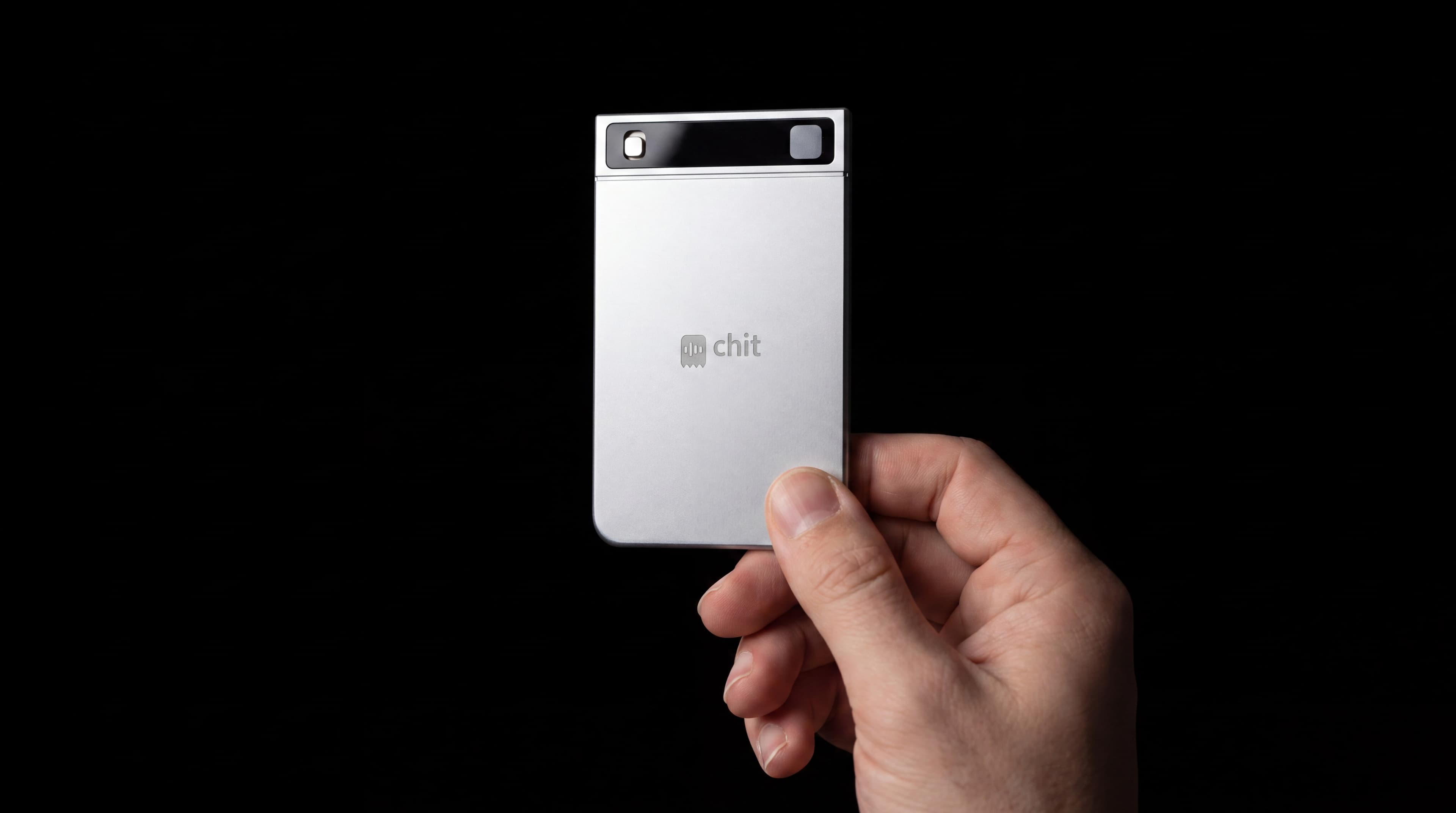
chit is a card-sized AI voice recorder that records only while the button is held. Its AI membership returns transcripts, summaries, and next steps; a daily brief brings captures together. You can use that output to fill and check this template. The exact headings and table here are a suggested workflow, not a promised automatic app format.
chit one costs $129 and chit one Pro costs $179, plus $9/month for the AI. Membership billing starts 14 days after checkout; devices are built to order with delivery in about three weeks, so billing may begin before delivery. The template is free to use with your existing notes process.
Good questions
Can I copy this into Google Docs or Word?
Yes. Copy the fields and action table into your document, then replace the bracketed prompts. There is no signup or product purchase required.
What if nobody agreed to own an action?
Write “owner to confirm” and identify who will resolve that gap at the next checkpoint. Do not assign a person who did not accept the task.
Should I keep the full transcript with the notes?
Keep an appropriate source reference when the details matter. The short note is the reviewable working record; the source helps you check a quotation, number, or condition.
Does chit automatically produce this exact template?
No exact template format is promised here. chit produces transcripts, summaries, and next steps; review that output and organize it using the fields that suit your meeting.
Reviewed 2026-09-08.
Elsewhere on the site
Nearby trades