chit at work
Choosing a voice recorder for interviews (that also does the transcribing)
For decades the interview kit was two purchases: a recorder for the room, and transcription — your evening or someone's invoice — afterwards. The reason to buy a dedicated interview recorder in 2026 is that the second purchase is gone: the transcript should simply arrive.
This is general information, not legal advice. Recording law varies by state and by situation, it changes, and only a lawyer in your jurisdiction can tell you what applies to you. chit records only while you hold the button — that is a fact about the device, not a statement that any particular recording is lawful.
What matters in the room
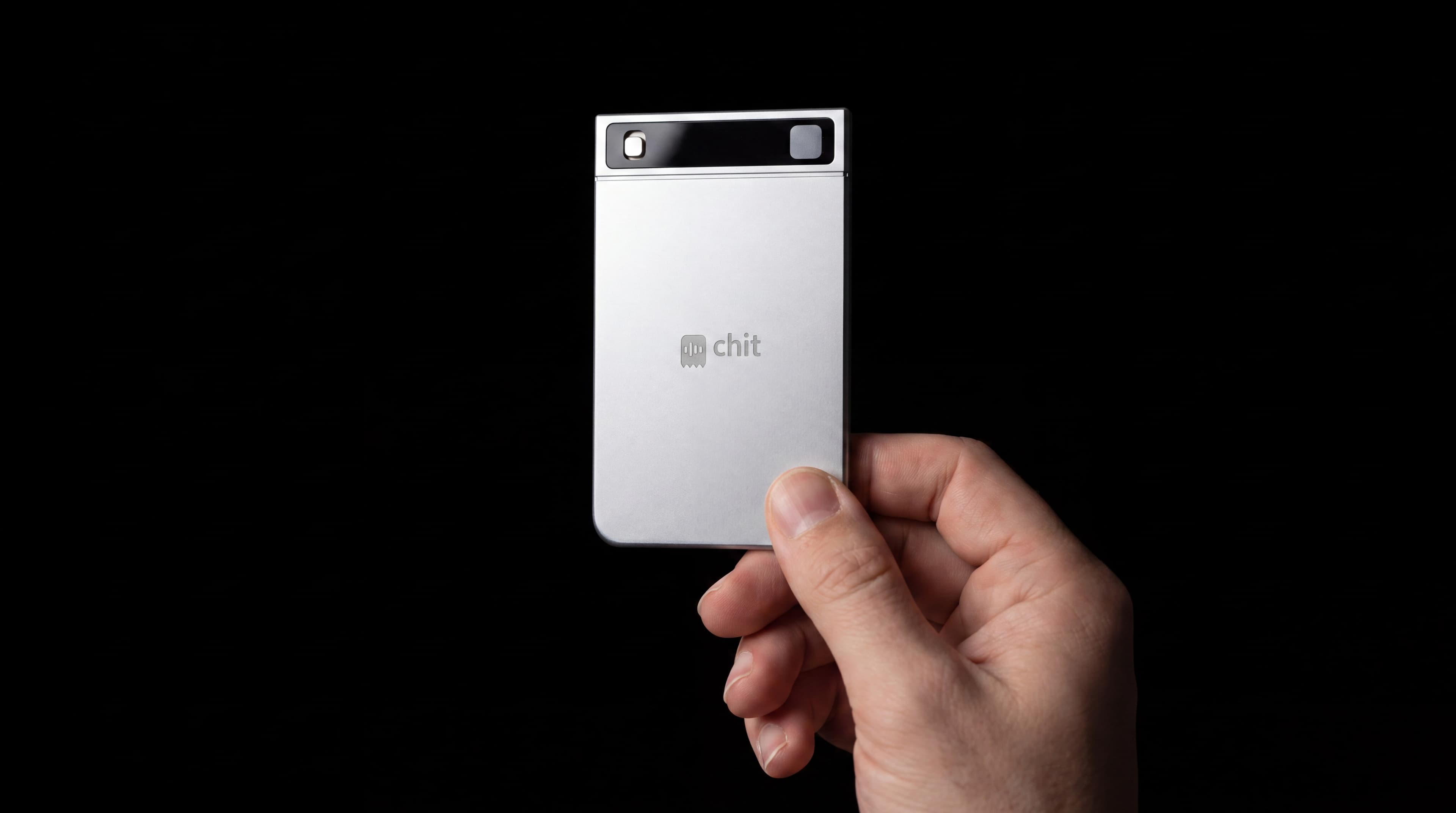
An interview is a trust exercise, and the equipment is part of the conversation whether you like it or not. A phone face-up between you reads as a phone — notifications, the suggestion of other business. A card is smaller than a notebook, starts with one press, and records only while the button is held, which means your subject can see exactly when it is running. That visible boundedness is not a spec-sheet line, but it is the thing interviewers notice first: the device stops being a presence and the conversation gets better.
chit records offline and syncs later — useful in courthouses, basements and buildings that eat signal — and runs about a month on a charge, so the pre-interview ritual is not charging equipment.
From audio to working transcript
Every capture becomes a transcript with the membership, and ask-anything search runs across all of them. In practice that changes how you find quotes: instead of scrubbing audio for the moment they said the thing, you ask for it and get the moment back with a timestamp. The summary and next steps come back too — for a hiring loop that means the follow-ups you promised; for a story it means the threads to chase.
Two honest limits, because interviewers deserve precision. chit does not label speakers — the transcript is the words, not a who-said-what script. The working fix is the one broadcasters use anyway: say names as you go, and let the transcript carry them. And for anything you will publish, check the quote against the audio before it runs; that is good practice with any transcription, ours included, and we would rather say so than imply otherwise.
One recorder, four kinds of interviewer
The same loop — record, transcript arrives, search across everything — bends to each interviewing trade. Journalists get quotes without an evening of scrubbing. Recruiters get every candidate answer searchable across a loop, instead of a memory contest after the fifth screen. Researchers get interviews ready for coding, with office hours and committee meetings in the same archive. Podcasters get the pre-interview and the debrief captured — the planning conversations that never had a workflow. The related pages below go deep on each.
Get the consent on tape
Interviews are the canonical consent case, and the standard is higher than the legal floor: most states permit recording with one party's consent, roughly a dozen require every party, and professional ethics in journalism and research expect a clear yes regardless of the map. The habit that satisfies all of it takes ten seconds and becomes part of the recording itself: press the button, then ask — "I record interviews so I can quote you accurately; are you comfortable with that?" The yes is now on the tape, timestamped, attached to the interview it covers. Our how-to-ask page has variants for sensitive interviews; the state table has the statutes. None of this is legal advice.
The kit, priced
chit one is $129, chit one Pro is $179 — the Pro is the same capture in a larger, faceted body that is easier to find by feel. The $9 a month membership covers unlimited transcripts — no per-minute meter, which matters when interviews run long — plus the digest, search, calendar and mail connections and cloud backup. Billing starts about two weeks after checkout, roughly when the device arrives. Free shipping, free 30-day returns, one-year limited warranty.
Good questions
Does it tell me who said what?
No — transcripts are not speaker-labelled. Say names as you go and they ride along in the words, where search can find them.
Can I record phone or video interviews with it?
It records the room it is in, not a phone line — hold it through a speakerphone conversation and it hears what the room hears, but for remote interviews a call-recording tool is the better instrument. chit is for the interview across the table.
How accurate is the transcript?
We do not quote accuracy percentages — no honest vendor can promise one for your room, your accents and your audio. Working practice: treat the transcript as your working document and verify publishable quotes against the audio.
Do interviews count against a minute limit?
No. Transcription is unlimited with the $9 a month membership — a three-hour oral history costs the same nothing extra as a ten-minute screen.
Reviewed 2026-08-23.
Nearby trades
chit for journalism
Your recorder transcribes. It does not know your beat.
Recruiterchit for recruiting and staffing
The candidate's real number was said in minute four.
Host / producerchit for podcasters and creators
Show notes should not take longer than the show.
Professor / researcherchit for higher education
Your IRB approved the study, not your transcription vendor.