chit at work
How to take notes while driving safely
The car is where a lot of people do their best thinking and their worst note-taking. This page is going to be less encouraging than most: the honest answer involves stopping, and the reason is not what most articles about hands-free technology suggest.
Hands-free is not risk-free
The assumption behind most hands-free advice is that the danger of using something while driving is the hands. Research on driver distraction has consistently found otherwise: a substantial part of the impairment is cognitive — attention spent composing and holding a thought is attention not spent on the road, whether or not your hands are on the wheel.
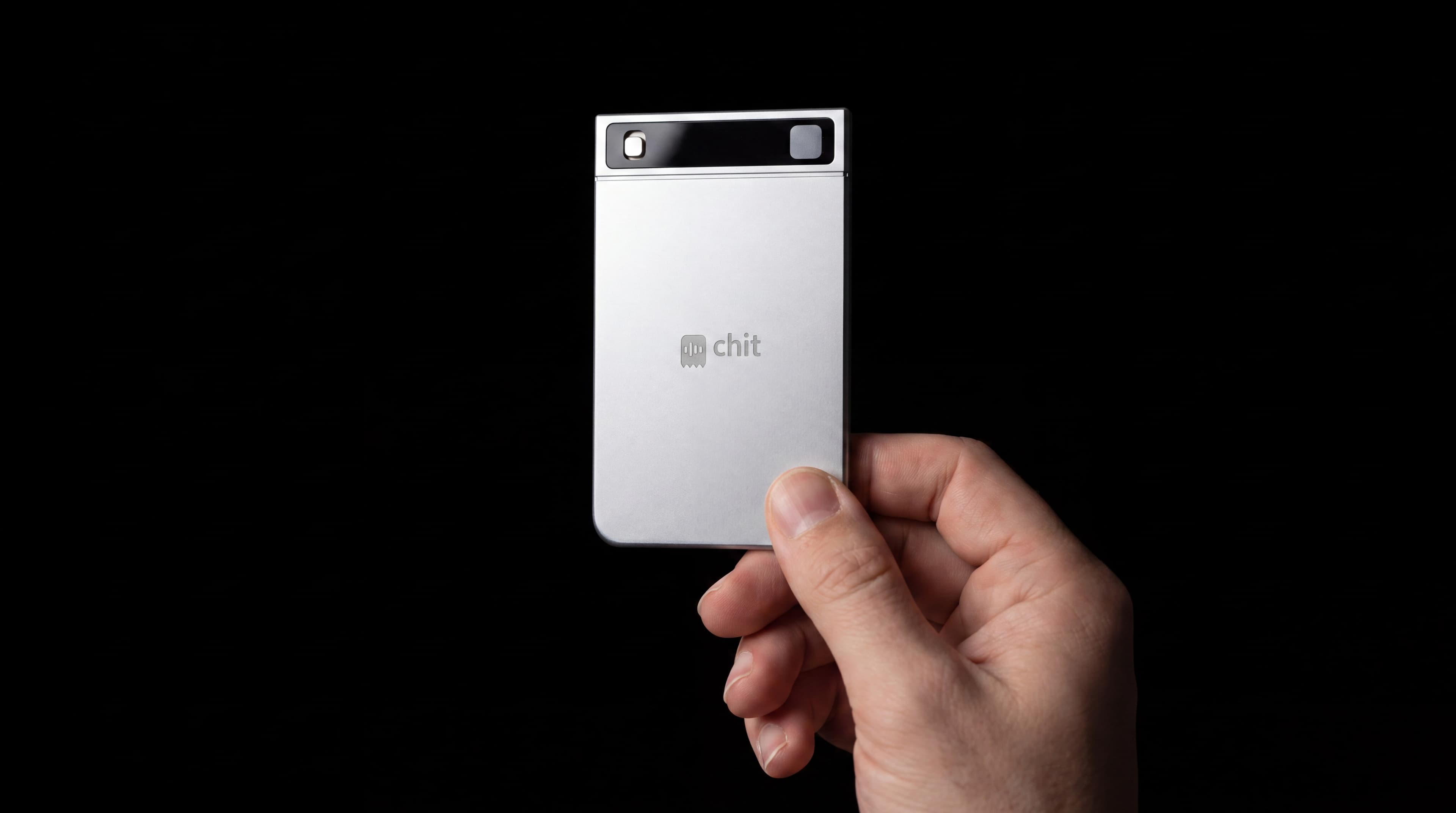
So a page that tells you to dictate a five-minute memo at seventy is giving you advice that sounds safe and is not. We would rather say that plainly, including where it is inconvenient for us: chit is not a hands-free device. It records only while you physically hold the button, which means using it while driving means holding something, which is worse.
The habit that works
Almost everything worth capturing in a car survives four minutes. The thought you have pulling away from a job site is still there in the parking lot at the next one — what you lose is not the idea but the detail, and the detail survives long enough to get somewhere safe.
- Capture in the yard before you pull out, not on the road. The conversation just happened; it is at its sharpest.
- Use the red light or the loading dock, stopped, in gear-park. Twenty seconds is enough for a recap.
- Pull over if it is genuinely urgent. If it is not worth a lay-by it is not worth the risk.
- Batch it at the end of the run rather than one at a time on the move.
- Say the address or the job first, so the note attaches to something when you read it back.
Why the stopped recap is better anyway
There is a practical argument beyond safety. A recap made while driving is fragmentary — you are narrating around your attention. A recap made stopped, thirty seconds after the conversation, tends to be complete: what was decided, what you promised, what you need to do next.
That is the version that turns into something useful at the end of the day. With the $9 a month membership, each capture becomes a transcript and the day comes back as a digest of what happened and what was decided. A dozen fragments recorded at speed makes a worse digest than four clean recaps.
Know your local law too
Rules on handling any device while driving vary by state and many have specific restrictions. This is general information rather than legal advice, and your jurisdiction's rules are the ones that apply — not a product page's.
Good questions
Is chit hands-free?
No. It records only while the button is physically held. That is a deliberate design decision, and it means it is not a device to use on the move.
Can I use it at a red light?
Stopped and in park is the version we would describe. Local rules on handling devices while driving vary and this is not legal advice.
Will I lose the thought if I wait?
Rarely. What fades is the detail, and it survives the few minutes it takes to stop. A recap made stopped is usually more complete anyway.
What about long hauls with nowhere to stop?
The yard, the dock, the fuel stop and the scale are all natural pauses. Drivers who use it this way batch a few captures at each rather than narrating on the move.
Reviewed 2026-08-07.
Nearby trades
chit for OTR trucking
Detention pay dies without a timestamp. Your drivers already narrate it - capture it.
Route driverchit for last-mile delivery
Every 'driver said / customer said' claim, settled by the recording.
Agentchit for residential real estate
Your buyer told you their real budget at the third showing. Where did it go?