chit at work
A voice recorder for insurance adjusters
Who carries it: Field adjuster
A CAT day is six roofs, a dozen claimant conversations, and a contractor arguing scope in the driveway. A voice recorder for insurance adjusters captures loss-scene narration and scope agreements as you walk the damage; that evening it hands back per-claim notes ready for the estimate and reserve updates queued.
Every reopened claim is a conversation that was not documented.
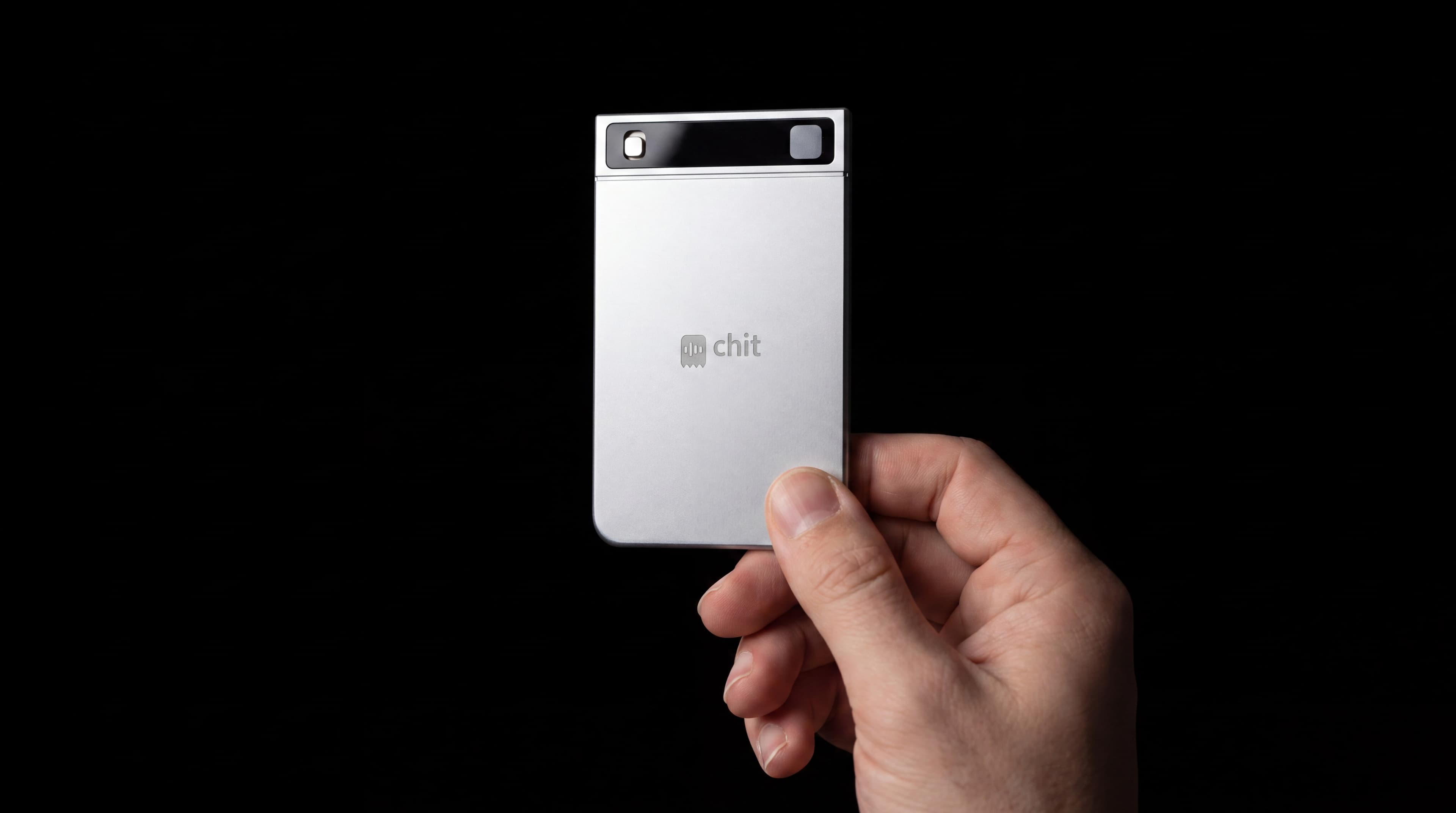
When a field adjuster presses it
- Loss-scene narration
- claimant interviews
- contractor scope talks
“CAT field adjuster; capture damage by elevation, claimant statements, and scope agreements.”
A context like this — typed once into the app — is how chit stops being a generic recorder and starts being yours.
Scene narration feeds estimate notes; reserve updates queued.
Scene narration and scope agreements captured per claim, in the carrier's own VPC.
Claim data stays in the carrier's own VPC.
Narrate the loss, elevation by elevation
A CAT adjuster's day is a sequence of losses that blur together by the fourth one, and the estimate depends on detail that was observed hours earlier. Walk the loss and narrate: elevation, room, damage, measurement, what the contractor is claiming, what the claimant said happened. It becomes scene documentation with the timestamps attached, and the evening digest is estimate-ready notes with the reserve updates queued. Recorded statements are their own procedure with their own rules, and those rules are yours to follow — chit records only while the button is held, so a statement is never captured by accident. Carrier deployments keep the whole file resident in the carrier's own VPC, which is the answer the carrier's security review is going to want first.
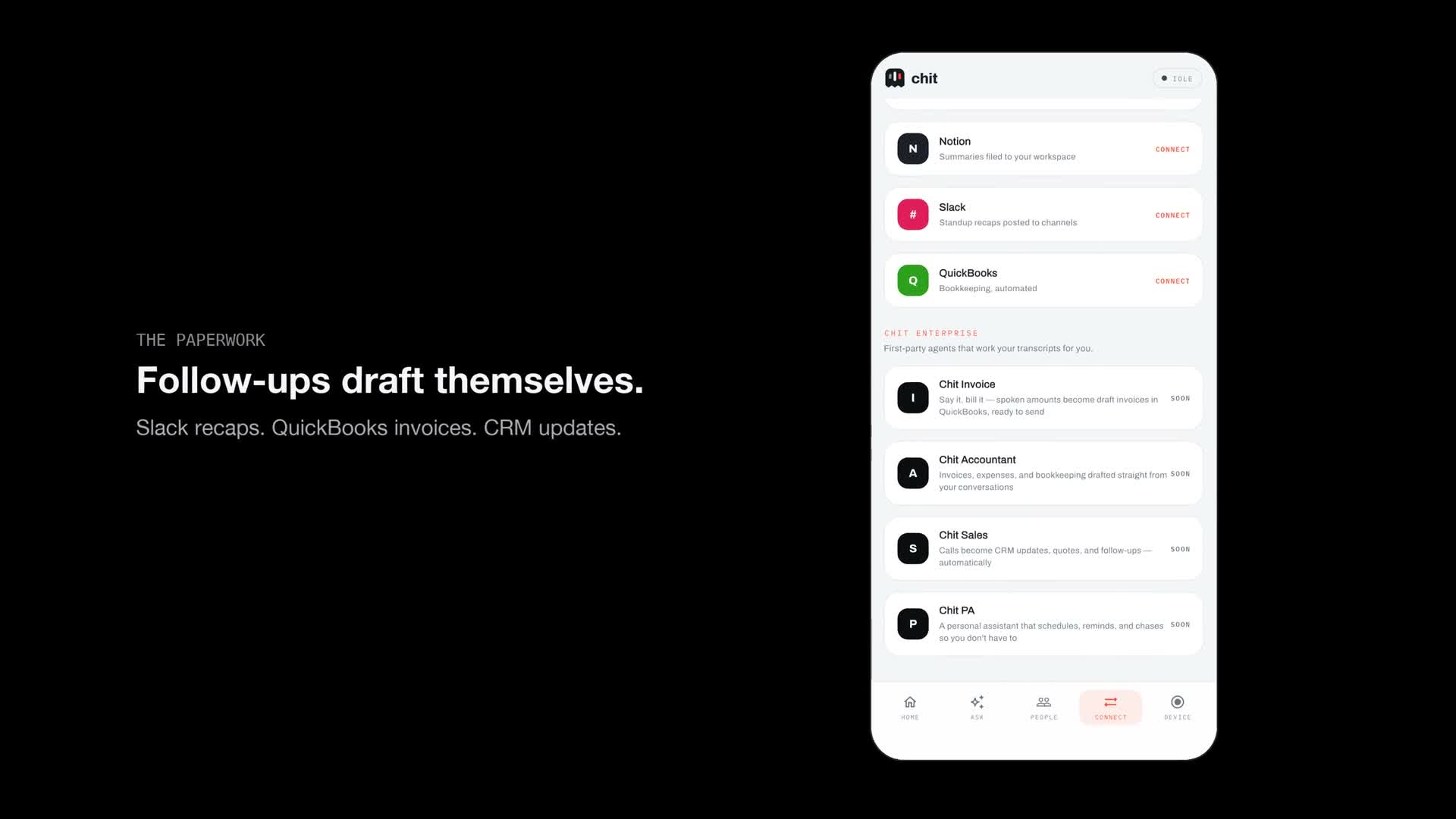
See the app work
Good questions
Can I use it one-handed on a roof or a ladder?
Yes — it's one button, held to record. No unlocking a phone, no app to open; the card is 3.9 mm thin and rides in a chest pocket.
Does it work in a disaster zone with no cell service?
Yes. chit records offline and syncs when you're back in coverage, and the battery runs about a month of typical use — it isn't another thing to charge every night of a deployment.
How should I handle claimant statements and consent?
Recording-consent rules vary by state — this isn't legal advice. chit records only while the button is held, so recording is always a deliberate, visible act you can disclose and stop.
Will my narration actually help the estimate?
Narrate damage by elevation and room as you walk; each claim files as a timestamped transcript, and the daily digest pulls out damage noted, scope agreed with contractors, and next steps — ready to work into the estimate.
Can claim data stay inside our carrier's environment?
Yes — enterprise fleets keep recordings and transcripts resident in the carrier's own VPC. See hichit.com/enterprise, and ask us about compliance deployments.
This is general information, not legal advice. Recording law varies by state and by situation, it changes, and only a lawyer in your jurisdiction can tell you what applies to you. chit records only while you hold the button — that is a fact about the device, not a statement that any particular recording is lawful.
Recording laws differ by state, and several require every party's consent. chit only captures while the button is held — know your state's rule before recording another person.
Nearby trades
chit for financial advisory
Reg BI runs on documentation. chit captures the conversation your documentation comes from.
CPA / bookkeeperchit for accounting
Scope creep starts on calls nobody memorialized.
Attorneychit for legal
Privileged means your transcription vendor cannot be a co-defendant.
Recruiterchit for recruiting and staffing
The candidate's real number was said in minute four.