chit at work
A pocket-sized voice recorder built for field sales reps
Every call-recording tool in your stack shares one blind spot: it only hears what happens on a call. The field visit, the walk-in, the demo at the customer's office, the conversation in their parking lot — the meetings where deals actually move — end with you reconstructing them from memory into a CRM note three days later. That note is the least reliable data in the pipeline.
This is general information, not legal advice. Recording law varies by state and by situation, it changes, and only a lawyer in your jurisdiction can tell you what applies to you. chit records only while you hold the button — that is a fact about the device, not a statement that any particular recording is lawful.
The unrecorded majority
Sales tooling has spent a decade getting very good at calls, and the result is a strange inversion: the more a meeting matters, the less likely it is to be captured. Enterprise deals close in rooms. Field reps sell in kitchens, on lots, on shop floors and across folding tables, and none of it has a join link. What survives is whatever made it into the car-ride memory, and by the time it is typed up, the metric the buyer named and the exact objection are gone.
The searches say wearable — the design here is held
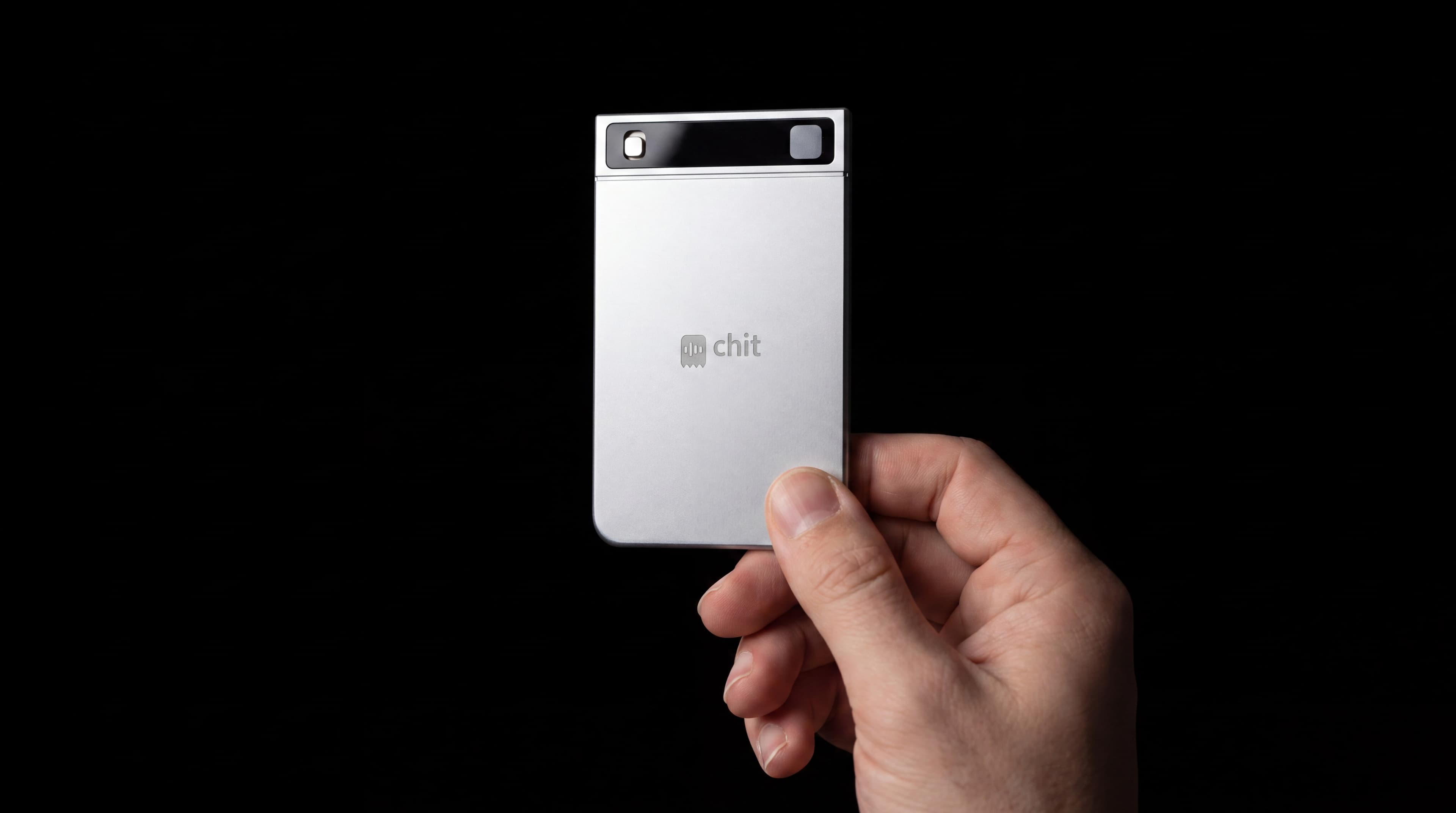
A lot of what ranks for this query is worn: a pin on your shirt, recording as you go. chit is deliberately not that. It is a card you hold, and it records only while the button is physically held — no wake word, no always-on microphone. In front of a prospect that difference does real work: recording is visible and bounded, it starts when everyone can see it start, and it stops when you let go. A rep whose device might always be listening has a question to answer in every room. A rep holding a card does not.
The card also survives field conditions the way a phone app cannot: it records with no signal and syncs later, runs about a month on a charge, and needs nothing opened or unlocked.
After the meeting: same-day follow-up
Each capture comes back as a transcript, and the day comes back as a digest with the next steps pulled out — the pain in their words, the number they named, who the champion is, what you promised and by when. With mail connected, the follow-up email arrives drafted from what was actually said; you edit and send it the same day, while competitors are still typing "great to meet you." With calendar connected, the commitments can become events before the next stop.
The honest gap, stated plainly: chit does not write into your CRM. First-party agents that do that are coming, and until they ship we describe them as coming. Today the next steps are ready to paste — which still beats the three-day-old memory they replace.
The windshield debrief
The habit that makes this work is thirty seconds in the driver's seat between stops: hold the button and say the account, the need, the objection and the next step, before the next meeting overwrites it. It is your own voice, alone in your own car — no consent question at all — and it is safer and faster than typing in a parking lot. Our driving-notes page covers doing this without touching a screen.
Recording prospects, legally and comfortably
If you record the meeting itself rather than your debrief after it, consent law applies. Most states permit recording with one party's consent, but roughly a dozen require everyone in the conversation to agree — and client conversations are exactly where you do not want to be wrong. The comfortable habit is also the safe one: say you are recording so you can be present instead of taking notes, and get the yes on tape. When in doubt, use the debrief pattern instead; it captures what the pipeline needs without recording anyone but you.
Rolling it out to a team
For a rep buying their own: the device is $129 (chit one) or $179 (chit one Pro), the membership is $9 a month, and it is a legitimate work-equipment expense on most policies — our expensing guide has the wording. For a team, fleet deployments carry your own branding and keep every capture resident in your own VPC rather than ours; see hichit.com/enterprise. Free shipping, free 30-day returns, one-year limited warranty.
Good questions
Does it write to Salesforce or HubSpot?
No. First-party agents for that are coming; until they ship, you get the transcript and next steps ready to paste. We would rather say that plainly than imply otherwise.
Does it record my sales calls?
No — chit records the room it is in, not your phone line. For calls, use a call-recording tool; chit exists for the meetings that have no line to record.
Do I need the prospect's permission to record?
Often yes — a dozen or so states require every party's consent, and asking is the professional move everywhere. The self-debrief afterwards needs no one's consent, because the only voice on it is yours. None of this is legal advice.
Can my company deploy these to the whole team?
Yes. Fleet deployments carry your branding and keep captures resident in your own VPC. See hichit.com/enterprise.
Reviewed 2026-08-23.
Elsewhere on the site
Nearby trades