chit at work
Trade show follow-up: stop losing the forty conversations you had at the booth
The badge scanner is an inventory tool pretending to be a memory. Monday after the show you have a spreadsheet of names — and no record of which one had the integration problem, which one's contract is up in Q1, and which one you promised a demo by Friday. The conversations were the entire point of the booth, and they are the one thing the expo stack does not capture.
The badge-scan illusion
Scanning captures who; the deal lives in what. After forty booth conversations, the who-said-what pairing collapses within hours — every conversation was three minutes long, standing up, over noise, with the next person already hovering. Business cards with cryptic pen notes on the back are the traditional fix, and everyone who has flown home with a pocket of them knows how that ends.
The thirty-second debrief, per conversation
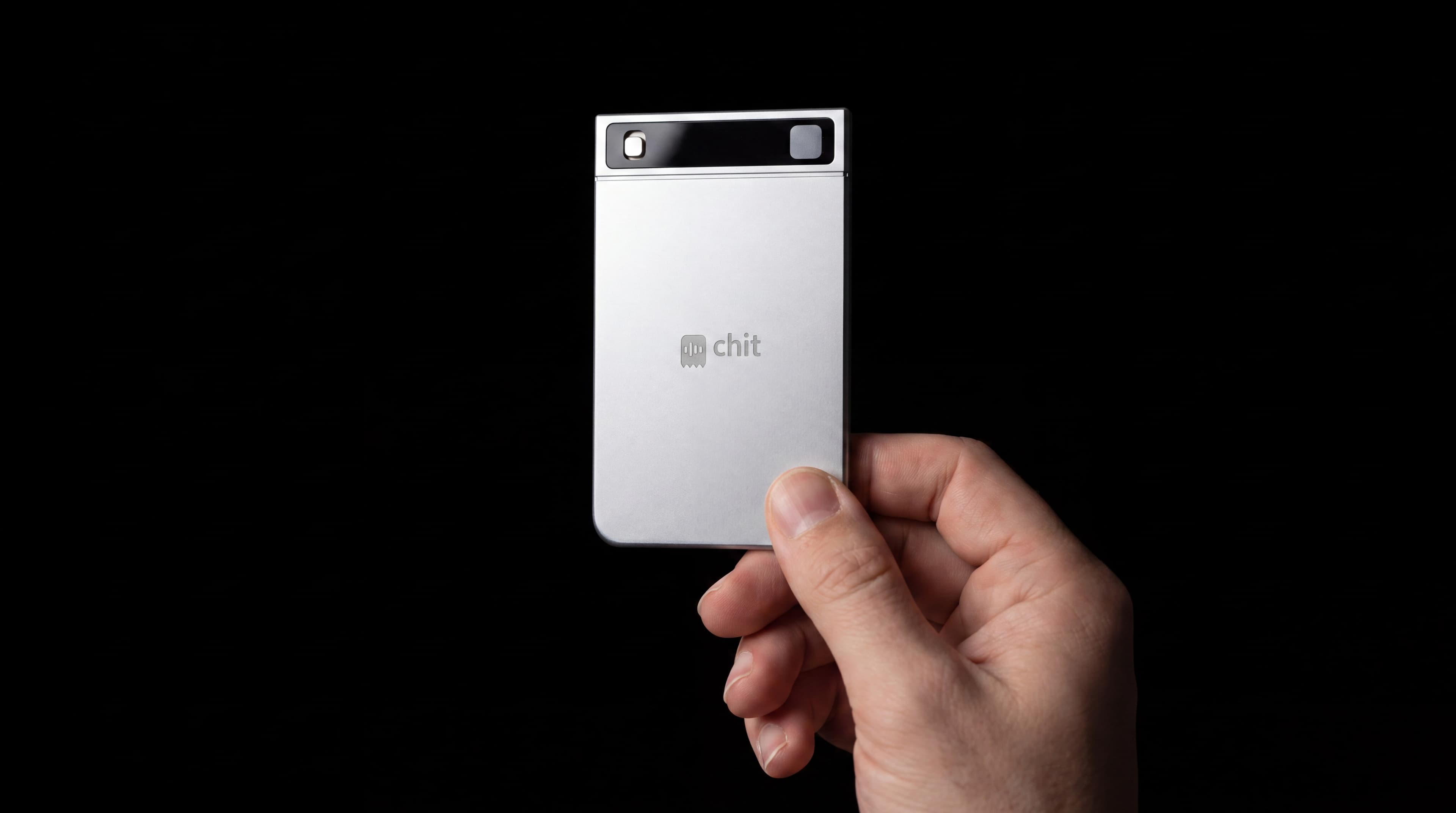
The pattern that works: as each conversation ends and the person walks away, hold the button and say the name on the badge, the company, what they need, and what you promised. Thirty seconds, forty times a day. chit is a card — it sits in a pocket or on a lanyard-free hand, records while held, and needs nothing opened or unlocked, which matters when the next conversation is already starting.
The debrief pattern has two quiet advantages over recording the conversations themselves. It is your own voice only, so there is no consent question on a crowded floor — though if you ever do record the conversation itself, the person should hear you say so first; the state-law reference is linked below. And it sidesteps the acoustic reality of an expo hall, because you can turn away from the noise to speak. It also survives the other expo reality: capture is fully offline, so a conference-center floor with ten thousand phones and no usable signal changes nothing — everything syncs from the hotel.
End of day one: a summary per conversation
That evening, the digest lands: each debrief as its own entry, with the next steps pulled out — the demo promised, the intro to make, the pricing question to answer. Instead of a pocket of bent cards, day one closes with a structured list of who needs what. Ask-anything search covers the whole show afterwards, so "who was the one with the SSO requirement" has an answer in November.
The follow-up sprint
Most booth follow-up fails on genericness — by the time anyone writes, they remember nothing specific, so everyone gets the same blast. Your debriefs fix the input problem: with mail connected, follow-ups arrive drafted from what you actually said about each person, and you send them yourself — Tuesday, while competitors are still sorting cards. Promised demos can go onto the calendar as next steps. chit does not integrate with badge scanners or write to your CRM; the summaries are ready to paste against the scanned list, and that pairing — their contact data, your conversation notes — is the whole game.
Event-day logistics
The practical notes: the card runs about a month on a charge, so a three-day show is nothing; it weighs about as much as a house key and takes no booth space; and capture works with zero connectivity all day. One planning note — chit is built to order with a lead time of about three weeks, so if you are buying for a specific show, order ahead of it. chit one is $129, chit one Pro is $179, the membership is $9 a month with billing starting about two weeks after checkout, and returns are free for thirty days.
Good questions
Does it integrate with badge scanners or my CRM?
No. The scanner gives you the contact list; chit gives you the conversation notes and next steps, ready to paste against it. First-party agents are coming; today we say what it does today.
Will it work on a loud expo floor?
The debrief pattern is built for exactly that — you speak your recap facing away from the noise, rather than fighting it. For capturing an actual booth conversation, the multi-microphone array does real work, but a quiet corner beats any microphone.
There's no signal at the venue. Does that matter?
No. Capture is fully offline; recordings sync when the device next sees a connection, and the transcripts and digest arrive then.
Can I get one before my show?
Units are built to order on about a three-week lead time, so order at least a month out. Shipping is free, and if the habit does not stick, returns are free for thirty days.
Reviewed 2026-08-23.
Nearby trades
chit for event planning
The bride said 'no peonies' exactly once. chit heard it.
AE / SDRchit for B2B sales
Gong ends where the handshake begins. chit does not.
Major-gifts officerchit for nonprofit development
Major gifts close on remembered details from meeting two.